
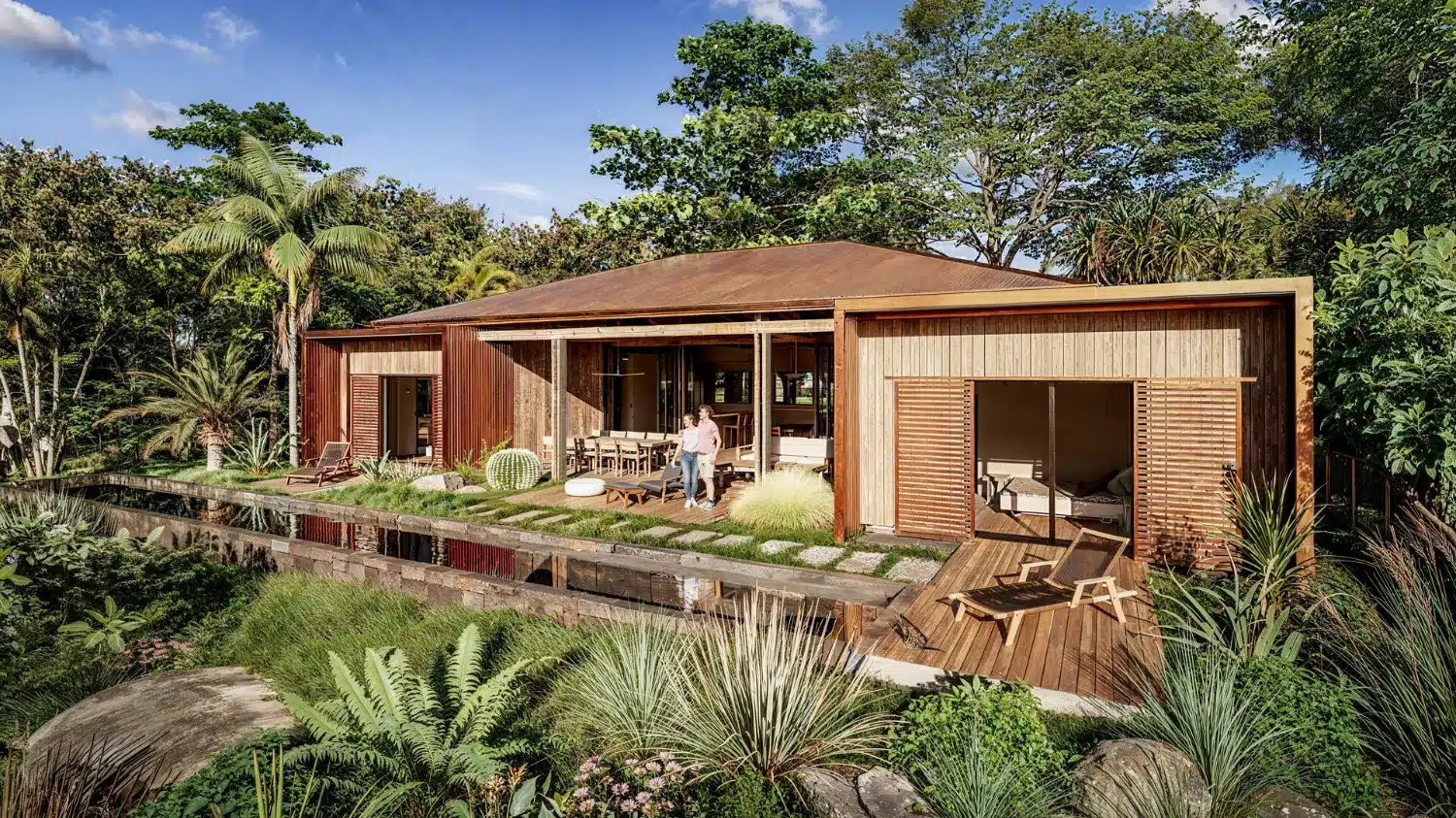
A bioclimatic villa in Mauritius intelligently exploits the tropical climate to provide optimal thermal comfort while minimizing energy needs. In the face of current climate challenges, investors favour sustainable, self-sustaining habitats that are perfectly adapted to their environment. This type of eco-friendly construction is a relevant alternative to traditional buildings.
What is a bioclimatic villa?
Principles of bioclimatic architecture
A bioclimatic villa is designed to take advantage of the natural characteristics of the site on which it is located. It optimizes thermal comfort by reducing energy needs through passive strategies adapted to local climate.
In Mauritius, where the climate is warm and humid, this implies:
- a thoughtful orientation to capture prevailing (alized) winds and promote effective natural ventilation;
- of the appropriate sunscreens : roofs with wide overflows, variangues, sunbreaks, wooden slatting to limit the overheating of the building while allowing the light to enter;
- use of local and natural materials (certified wood, stone, vetiver) for efficient thermal insulation and natural moisture regulation;
- integration of vegetation around the house and vegetated roofs to create shade zones and cool ambient air.
Adopting these bioclimatic principles significantly reduces dependence on energy-efficient systems (such as air conditioning). They offer sustainable and natural thermal comfort in a healthy and harmonious habitat with its environment.
A sober and durable design
Bioclimatic design aims to reduce the energy needs of the building from the design stage, with a focus on simple and efficient solutions. For example:
- the orientation of the parts to maximize the thermal comfort ;
- the size, nature and arrangement of the openings to optimize the natural ventilation ;
- use of high-strength materials thermal inertia to stabilize the inside temperature.
These choices make it possible to maintain a pleasant temperature throughout the year, without using air conditioning.
This energy sobriety is part of a logic of sustainable development, limiting the carbon footprint of the building over its entire life cycle.
Differences with a traditional house
The current houses in Mauritius are, for the most part, designed according to conventional standards, without specific integration of bioclimatic principles adapted to tropical climate. Thermal comfort is ensured mainly by energy-efficient systems such as air conditioning. On the other hand, a bioclimatic villa is designed from the conception to adapt naturally to its environment. The aim is to drastically reduce energy needs. Its location and orientation are determined in relation to the winds and the sun running.
This integrated approach not only reduces energy costs, but also reduces environmental impact, while providing a healthy and enjoyable living environment.
How does a bioclimatic villa ensure energy autonomy?
Solar production and energy self-sufficiency
With a very high annual rate of sunshine, Mauritius offers ideal conditions for the production of solar energy. The independent energy bioclimatic houses are equipped with photovoltaic panels or solar tiles and solar water heaters. These devices are dimensioned to meet current domestic needs. In the programme Jiva Santosha, they are coupled to storage batteries and connected to a microgrid. The batteries provide continuous power supply, even at night or in case of shutdown of the electricity supply network. The microgrid, on the other hand, collects and redistributes the solar energy produced to all buildings in the residential area. The term self-consumption is used.
Natural ventilation and thermal comfort
Energy autonomy also involves reducing the need for air conditioning. Lbioclimatic architecture promotes natural refreshment through:
- optimized orientation to capture fresh winds;
- through openings that facilitate air circulation;
- interior volumes designed to maximize ventilation.
Plant shade completes this passive device. Planting endemic species near the villas protects the facades from direct radiation and creates fresh areas.
Sustainable water recovery and management
Water is a valuable resource in Mauritius. Bioclimatic villas include rainwater recovery, storage and filtration systems for non-drinking domestic uses and irrigation (grey and black waters). Roofs are designed to maximize collection and autonomous circuits irrigate gardens. Also, the materials used promote soil permeability to reduce runoff for natural infiltration.
Why invest in a bioclimatic villa in Mauritius?
Reduced operating costs
A well-designed bioclimatic villa significantly reduces energy expenditures. Thanks to solar production, natural ventilation and water recovery, monthly loads are significantly reduced.
On a high-end scale, this represents substantial long-term savings, without compromising on comfort.
The villas Jiva Santosha This allows owners to benefit from efficient, independent and energy-efficient housing.
Heritage development and market attractiveness
Sustainable real estate is increasingly sought after. A bioclimatic villa well located and built according to high standards sees its value increase over time.
In Mauritius, this type of eco-responsible property remains rare, making it a different asset in the high-end market. Jiva Santosha is positioned on this segment with an offer designed to meet the expectations of investors concerned about the sustainability of their wealth and energy performance.
Legal and tax framework favourable to foreigners
Property Development Scheme (PDS) is the main framework for non-resident real estate investment in Mauritius. It allows foreigners to acquire property in full ownership in projects approved by the Mauritian authorities, with a secure legal framework and attractive taxation.
The purchase of a villa under the PDS scheme also opens the possibility of obtaining a permanent residence permit, subject to a minimum investment of USD 375,000. This status facilitates the installation in the Territory, the opening of bank accounts and long-term asset management.
The eco-construction programme Jiva Santosha is developed under PDS. It guarantees international investors an acquisition in accordance with local requirements, in a structured and transparent framework.
The bioclimatic villas in Mauritius represent an opportunity to invest, combining energy performance, respect for the environment and quality of life. Thanks to their sober design and adapted to the local climate, they combine comfort, savings and low carbon impact. For future-oriented investors, it is an investment that combines profitability and commitment to more sustainable development.
Moreover, the eco-responsible character of these villas, making them very popular properties in the high-end seasonal rental market, thus promoting a high rental yield. Experts specialized in the rental management of environmentally friendly villas accompany the owners to ensure efficient, ethical and responsive management for demanding customers.
The process of purchasing a bioclimatic villa in Mauritius follows the same steps as for any other property. However, foreign investors can benefit from expert advice and support from our team to navigate the administrative process at best.
Contact our team today to discover our bioclimatic prestige villas and benefit from personalized support in your investment project in Mauritius.